Ukrainians in Finland: rights and obligations after obtaining kotikunta
Kotikunta is the municipality of residence that the DVV enters in the Population Information System. Once you obtain it, you cease to be a client of the reception services for refugees and move to the services of the municipality. Rights and obligations after obtaining kotikunta largely correspond to those of other permanent residents of the country.
The DVV grants kotikunta to Ukrainians under temporary protection after one year of residence, provided that the permit remains valid for at least one year. The application is voluntary. Kotikunta does not affect citizenship and does not prevent a return to Ukraine. A municipality of residence may be held in only one country at a time.
Our experience at International Law Firm "Zahist" shows that, after obtaining kotikunta, people often assume that everything has already been arranged. In practice, new obligations arise concerning address, taxes, and benefits. Below we explain what changes for Ukrainians in Finland and how to avoid mistakes.
What kotikunta is and who can obtain it
Kotikunta means that you are officially regarded as a resident of a specific municipality. It is not the same as a temporary address. A temporary address is registered for a fixed period, usually one year, and does not confer all the rights of a resident.
| Criterion | Kotikunta | Temporary address |
| Status in the register | Permanent municipality of residence | Address for a fixed period |
| Municipal services | Yes, as for a resident | Limited |
| Duration | Indefinite, as long as the conditions are met | Usually one year, and it may be extended |
| How it is registered | A separate DVV online form | Notification of a change of address |
Under the DVV rules for persons under temporary protection, a Finnish personal identity code and a permit valid for at least one year are required. You must also have lived in the country for one year from the day you applied for the permit. Other grounds — work, studies, and family — have separate conditions.
- You have a Finnish personal identity code (henkilötunnus).
- Your temporary protection permit is valid for at least one year.
- You have lived in Finland for one year from the day you submitted the permit application.
- The application is submitted online; a visit to the DVV is usually not required.
According to the DVV, processing of the application takes approximately four to five weeks. The start date of kotikunta is the day the online form is submitted. If you need a different date, submit a paper form and visit the DVV in person.
Rights of Ukrainians after obtaining kotikunta
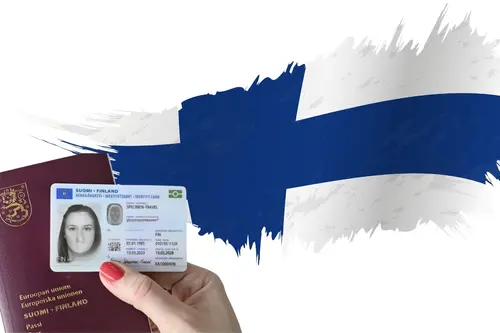
Kotikunta opens access to services available to residents of the municipality. According to the DVV, you may use municipal services, obtain a Finnish identity card and a driving licence, and receive financial benefits. You also become a client of the municipality instead of the reception service.
| Area | What kotikunta provides |
| Municipal services | Access to the services provided by your municipality of residence |
| Documents | A Finnish identity card and a driving licence |
| Benefits | The possibility of receiving benefits and subsidies under the conditions set by each authority |
| Status | You are no longer a client of the reception services for refugees |
| Citizenship | It does not change, and return to Ukraine is not blocked |
Specific rights concerning healthcare, daycare, and schools depend on the municipality and the applicable rules. Therefore, questions about services should be addressed to your municipality. We have written separately about medical care in an article on Ukrainians’ right to it.
Kotikunta and Kela benefits
Permanent residence in the country is one of the key conditions for many Kela benefits. Kela takes into account where you live and whether you have a basis for benefits. For child benefits, including lapsilisä, the child must live with you permanently in Finland.
Kotikunta does not guarantee an automatic right to any benefit. Kela assesses each application separately under its own rules. Before submitting an application, it is worth checking whether the conditions have changed, as happened with the home care allowance for a child from 2027.
Obligations after obtaining kotikunta
A resident of a municipality has obligations toward the state. The main ones concern registration, taxes, and notifications of changes. Below we set out the basic list that we recommend everyone who has obtained kotikunta keep in mind.
| Obligation | What this means in practice |
| Up-to-date address | Notify the DVV of a move to a new address |
| Taxes | File returns and pay taxes under the rules of the Finnish Tax Administration (Vero) |
| Residence permit | Renew it in time and comply with its conditions |
| Notification of changes | Inform Kela, the DVV, and other authorities of changes in your life |
| One country | Not hold kotikunta in Finland and in another country at the same time |
Tax residence is determined by the Finnish Tax Administration (Vero) under its own criteria, and not solely by the existence of kotikunta. Income received in Finland or abroad must therefore be reviewed separately. We recommend clarifying this, especially if you work in Ukraine or have a business there.
Change of address, moving, and departure abroad
If you already have kotikunta and are moving to a new address, do not submit a new application for kotikunta. It is sufficient to file a notification of a change of address, at a post office or online using bank codes or a mobile certificate. If you intend to live abroad for a prolonged period, kotikunta may end. This affects benefits and services. The DVV does not send a separate confirmation of address registration, so check the data yourself. It is better to seek advice in advance about prolonged absences.
How to apply for kotikunta
The application is submitted online if you meet the conditions for temporary protection. There is no need to visit the DVV, and notification of the outcome is sent to the email address provided. The DVV usually sets the start date of kotikunta as the day the application is submitted. If a different date is required, submit a paper form and visit the DVV. Kotikunta can also be registered together with a personal identity code by attaching a lease agreement as proof of residence.
Family and children after obtaining kotikunta
Kotikunta may also be requested for family members if they have a personal identity code and an appropriate permit. An application for a child is submitted by a guardian, and adolescents aged 15–17 may submit it themselves, but the guardian’s views are taken into account. The DVV rule on a joint application applies to those who live at the same address.
| Situation | What is important to know |
| Application for a child | Submitted by a guardian or a representative appointed by a court |
| Adolescents aged 15–17 | May submit it themselves, but the guardian is heard |
| Birth of a child | If the mother has kotikunta, the child receives a personal identity code at the maternity hospital |
| Mother without kotikunta | A code for the child is requested separately from the DVV |
| Proof of family ties | Original documents with an apostille and a translation are required |
If the mother does not have kotikunta, the child does not receive a code from the hospital. You must then complete the form for foreign nationals, book an appointment with the DVV, and bring the original birth certificate. This is where families most often lose time, so we recommend preparing the documents in advance.
From the practice of our clients: problems arise when original marriage or birth certificates with an apostille are missing. Without them, the DVV cannot register family ties. In that case, it will not be possible to obtain kotikunta on the basis of family ties.
Typical mistakes after obtaining kotikunta
People often assume that kotikunta resolves all issues, but that is not the case. Here are the mistakes we see most often.
- They do not report a change of address, and documents are sent to the old address.
- They assume that Kela benefits are paid automatically without an application.
- They do not monitor the validity period of their residence permit.
- They forget about their tax obligations in Finland and in Ukraine.
- They register a kotikunta without a confirmed period of residence, and the application is not accepted.
- They submit an application on a paper form where an online submission would suffice, and lose time.
Most of these problems can be corrected, but they take time. It is better to review your case before submitting an application.
Why it is difficult to deal with kotikunta on your own
DVV, Kela, Vero and Migri each have their own rules and time limits. Each authority uses its own language and systems, and an error in one of them affects the others. For new residents, this is a serious burden.
In addition, the conditions differ depending on status, and the rules change. A lawyer’s consultation helps ensure that kotikunta for Ukrainians in Finland is registered correctly and without loss of rights or benefits.
On your own or with International Law Firm "Zahist": a comparison
| Criterion | On your own | With International Law Firm "Zahist" |
| Checking eligibility for kotikunta | You check the conditions on the DVV website | Analysis of your status and time limits |
| Application | You submit it online yourself | Preparation of the application and documents |
| Language of documents | Finnish, Swedish or English | Explanation of decisions in clear language |
| Interaction with authorities | Separately with DVV, Kela and Vero | A single action plan for all authorities |
| Refusal or delay | You deal with it yourself | Preparation of an appeal and support |
We do not guarantee decisions by public authorities, as they are made by DVV. We help you submit a complete application on time and explain your rights and obligations.
How International Law Firm "Zahist" helps Ukrainians with kotikunta
We support the client at every stage so that they understand their rights and obligations.
- Analysis of eligibility for kotikunta and the conditions of your permit
- Drawing up a calendar of deadlines and filings
- Preparation of the application and supporting documents
- Advice on Kela, taxes and a change of address
- Preparation of appeals in the event of a refusal or delay
- Support in dealings with DVV and other authorities
- Support until registration is completed
At every stage, you know what is happening and are not left alone with the bureaucracy. This is especially important when benefits and services depend on your status.
Legal assistance for Ukrainians in Finland
Do not postpone checking your status, because many decisions depend on kotikunta. The earlier you analyse your situation, the lower the risk of losing rights or benefits.
Contact the lawyers of International Law Firm "Zahist" and we will help you determine what rights and obligations kotikunta gives Ukrainians in Finland, and prepare the necessary documents.