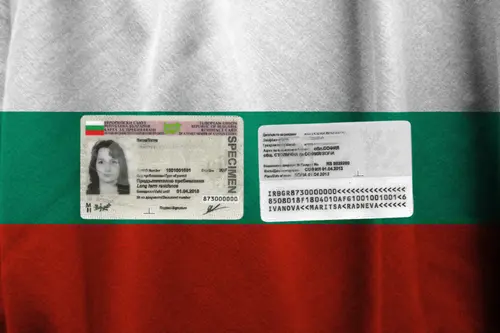












How to open a sole proprietorship (auto-entrepreneur) in France with temporary protection status

You can set up an auto-entrepreneur status with temporary protection immediately after obtaining a valid APS. Unlike most foreign nationals, holders of temporary protection do not need a separate permit for self-employment, as this condition is expressly provided for by the EU Temporary Protection Directive.
International Law Firm "Zahist" has a presence in France and assists clients with micro-enterprise registration through the Guichet unique INPI. Our experience shows that confusion between the rules applicable to ordinary foreign nationals and those applicable to temporary protection holders is the most common cause of refusals and delays in registration.
Why a temporary protection holder may open a sole proprietorship without a separate permit
For most foreign nationals from third countries, self-employed (non salariée) activity requires a special residence title — for example, an “entrepreneur/profession libérale” card or a passeport talent.
EU Directive 2001/55/CE on temporary protection expressly requires Member States to grant beneficiaries the right to work both as employees and on a self-employed basis, so an APS bearing the temporary protection endorsement already includes this right without any additional status-change procedure.
This means the applicant does not need to apply to the prefecture for a separate permit or change the type of APS — a valid document marked “bénéficiaire de la protection temporaire” is sufficient.
Step-by-step registration process through the Guichet unique INPI
All formalities for creating a micro-enterprise are completed through the single electronic window of the INPI, which since 2023 has replaced the former formalities centres.
- Prepare a copy of a valid APS marked with temporary protection and an identity document.
- Choose an address for registration of the activity — your own residence or a domiciliation service.
- Complete the electronic declaration of commencement of activity on the Guichet unique INPI website.
- Wait for the declaration to be forwarded to URSSAF for affiliation as a self-employed person.
- Obtain a SIRET number, which officially confirms registration of the enterprise.
The SIRET number usually arrives within a few days after submission of a complete set of documents, after which you may legally issue invoices to clients.
Documents for micro-enterprise registration
The document package for a temporary protection holder is simpler than for an ordinary foreign national, as it does not require a separate title for self-employed activity.
- Copy of a valid APS marked with temporary protection.
- Proof of the address of registration of the activity (lease agreement, utility bill, or domiciliation agreement).
- Declaration of absence of a criminal record that would preclude the chosen activity.
- Certificate of completion of a preparatory internship — only for certain craft activities.
Where to register the enterprise address
An address of registration of the activity is required even for a micro-enterprise without an office, and the simplest option is to give your own residential address if the lease agreement or residence certificate allows it.
If the landlord objects to registration of commercial activity at the home address, or if the applicant lives in a reception centre, a paid domiciliation service may be used, which provides an official postal address for the enterprise.
Our experience shows that for most consulting, craft, or freelance services a home address is entirely sufficient, and paid domiciliation is needed only in specific cases.
Regulated activities: additional conditions
For certain craft and commercial activities, micro-enterprise registration does not exempt you from additional requirements that apply equally to all entrepreneurs regardless of nationality.
- Craft activities (hairdresser, cook, builder) may require proof of qualifications or internship.
- Regulated professions (medical, legal, financial services) require a separate authorisation from the competent body.
- Sale of alcohol or food products requires additional sanitary registration.
Before registration, you should check whether the chosen activity falls into a regulated category in order to avoid a refusal after the SIRET number has already been obtained.
The ACRE benefit for newly created enterprises
ACRE (aide aux créateurs et repreneurs d'entreprise) is a partial exemption from social contributions during the first year of activity. The benefit is available to most newly created micro-enterprises provided the application is filed within the prescribed period after registration.
An ACRE application may be filed together with the declaration of commencement of activity on the Guichet unique INPI or separately within 45 days after registration.
Our experience shows that applicants who request ACRE immediately at registration, rather than later, avoid the risk of missing the deadline and losing the first-year benefit.
Choosing the activity category and income thresholds for 2026
The micro-enterprise (micro-entreprise) regime is divided into categories depending on the type of activity, and each has its own annual turnover limit and contribution rate.
| Category | Turnover limit 2026 | URSSAF contribution rate |
| Trade (BIC vente) | 203,100 € | 12.3% |
| Services (BIC services) | 83,600 € | 21.2% |
| Liberal professions (BNC) | 83,600 € | 21.1% |
In the case of mixed activity, total turnover must not exceed 203,100 €, and the services share of that amount must not exceed 83,600 €.
Social insurance for auto-entrepreneurs
Registration of a micro-enterprise automatically affiliates the applicant to the social insurance system for self-employed persons, which is integrated into the general social security scheme.
This insurance covers basic reimbursement of medical expenses, but it does not replace the primary medical cover through PUMa and the Carte Vitale, which a temporary protection holder already obtains separately under the general procedure.
Entitlement to reimbursement under self-employed social insurance depends directly on regular declaration of turnover and payment of contributions, so missing a declaration may temporarily suspend these rights.
Taxation: contributions and the flat-rate liberatory payment (versement libératoire)
URSSAF contributions are calculated directly on declared turnover at a fixed rate, without the need to keep complex accounts or file a separate VAT return until the exemption threshold is reached.
You may also opt for the liberatory payment (versement libératoire), which allows income tax to be paid together with contributions as an additional percentage of turnover — approximately 1% for trade, 1.7% for BIC services, and 2.2% for BNC.
The VAT exemption threshold is 85,000 € for trade and 37,500 € for services — a separate limit lower than the overall micro-enterprise ceiling.
Typical mistakes when opening a sole proprietorship with temporary protection
The most common mistake is attempting first to change the APS type to an “entrepreneur/profession libérale” title, even though temporary protection holders already have the right to self-employment without that change.
Another problem is confusing the micro-enterprise limits (203,100 € or 83,600 €) with the lower VAT exemption thresholds (85,000 € or 37,500 €), as a result of which applicants fail to start charging VAT in time.
Our experience shows that applicants who determine the correct activity category and contribution rate in advance avoid recalculations and penalties for incorrectly declared turnover.
Opening a bank account for a micro-enterprise
To receive client payments and pay URSSAF contributions, a separate account dedicated to the enterprise’s activity is required, although a full professional account is not mandatory by law for a micro-entrepreneur.
Most banks accept an application for such an account upon presentation of a SIRET number and an identity document, so it can be opened within a few days after registration of the activity.
Impact of the end of temporary protection on sole proprietorship status
Because the right to self-employment is tied to a valid APS, the entrepreneur must renew temporary protection in good time; otherwise the enterprise registration remains valid, but the right to work legally may be at risk.
If the holder moves from temporary protection status to refugee status or subsidiary protection, the right to self-employment is retained automatically, and there is no need to re-register the enterprise separately.
Accounting obligations of a micro-entrepreneur
The micro-enterprise regime does not require full-scale accounting; however, it imposes several mandatory record-keeping requirements that should be met from the first day of activity.
- Keep an income ledger in chronological order, indicating the date and amount of each receipt.
- Retain invoices issued to clients for at least ten years.
- File a turnover declaration monthly or quarterly on the website autoentrepreneur.urssaf.fr, even if income for the period was zero.
Failure to file a zero declaration does not relieve you of the obligation to submit it, and systematic omissions may result in a fine or suspension of status.
Expert view: when you should and should not choose sole proprietorship
An analysis of our cases shows that the micro-enterprise regime is best suited to moderate turnover and simple services, whereas rapid growth in income may make a switch to another legal form more advantageous.
We recommend calculating an indicative turnover for the first year in advance in order to assess whether it will approach the VAT exemption threshold and, if necessary, adjust pricing.
International Law Firm "Zahist" has a presence in France and helps holders of temporary protection correctly set up an auto-entrepreneur with temporary protection status — from choosing the activity category to filing the declaration on the guichet unique INPI.
An individual consultation helps you immediately choose the correct activity category and contribution rate in light of the actual volume of future work.
The sooner an applicant understands the difference between the rules for ordinary foreigners and the preferential regime for an auto-entrepreneur with temporary protection status, the less time they waste on unnecessary applications to the prefecture.