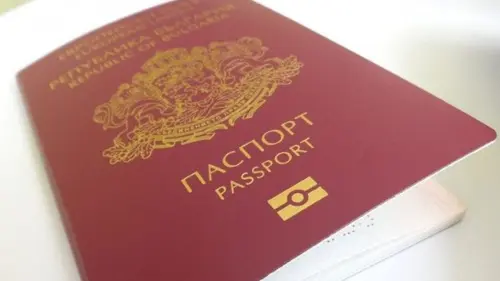









Obtaining a residence permit in Bulgaria
Bulgaria’s stay system has four successive levels — visa D for entry, extended stay of up to 1 year, long-term stay for 5 years and, finally, permanent residence with no time limit. Separate from this system is a simplified temporary protection regime specifically for Ukrainians who fled the war.
International Law Firm"Zahist" advises clients on legalization in Bulgaria. In our practice, the greatest confusion is caused by the sequence of statuses — people try to apply for permanent residence at once without completing the previous steps and receive a refusal due to a formal mismatch with the procedure.
We explain which levels of stay exist, which grounds and documents are required for each, and how temporary protection differs from an ordinary residence permit.
Four levels of stay in Bulgaria — the general system
A foreigner’s stay in Bulgaria is structured as a successive ladder of statuses: first visa D for entry, then extended stay, long-term stay and finally permanent residence — each next level requires documentary confirmation of the previous one.
| Level | Validity period | Main requirement |
| Visa D | Single-entry, for entry | Confirmed ground for stay (work, study, business, etc.) |
| Extended stay | Up to 1 year, renewable | Housing, health insurance, sufficient funds |
| Long-term stay | 5 years | Continuous lawful stay during the preceding period |
| Permanent residence | Indefinite | 5 years of lawful continuous stay |
Visa D — the first step for most grounds
Visa D is issued before entering Bulgaria, at a consular post abroad — it is the formal permission to enter for a long stay, not a short-stay tourist visa.
The state fee for examining a visa D application is EUR 100 — payment is made when submitting documents at the consulate.
The document package includes a completed application in the prescribed form, evidence of the ground for stay, proof of fee payment, copies of passport pages with the photo and personal data, as well as evidence of secured housing and health insurance.
Without a valid visa D, an application for extended stay already on Bulgarian territory generally cannot be filed — therefore this step is the starting point for almost all grounds except temporary protection.
Examination of a visa D application at the consulate may take several weeks, so documents should be submitted in advance, taking into account the planned entry date, and not at the last moment before travel.
Extended stay — grounds and requirements
The ground for extended stay may be official employment, entrepreneurial activity, studies at a higher education institution, family reunification or long-term medical treatment.
- Completed application in the prescribed form
- Evidence of the ground for stay — employment contract, business registration documents, certificate from the educational institution, etc.
- Proof of payment of the state fee
- Copies of passport pages with the photo, personal data, entry visa and stamp of the last entry
- Evidence of secured housing
- Health insurance contract
A separate requirement is proof of sufficient funds to live without recourse to the social assistance system: the amount must be no less than the minimum monthly wage or minimum pension set by Bulgarian law for the entire period of stay.
The application is submitted in person to the territorial unit of the administrative control of foreigners — that is where one applies both for the first issuance and for annual renewal of the status.
Because the status is valid only for up to 1 year, a renewal application should be filed in advance, before the current permit expires. A gap between the expiry of the old status and the next application may affect the continuity of stay required for subsequent levels.
Long-term stay — a 5-year status
Long-term stay is an intermediate status between annual extended stay and indefinite permanent residence, issued immediately for 5 years with the possibility of further renewal after filing a new application.
This status functionally corresponds to EU long-term resident status in other EU countries — and likewise requires proof of the stability of the applicant’s situation in the country.
In practice, not all applicants necessarily go through this intermediate level — some move from extended stay directly to permanent residence if the conditions for permanent status are formally met.
Permanent residence — indefinite status
Permanent residence is granted to foreigners who have lived in Bulgaria lawfully and continuously for the last 5 years — this is the basic condition for most applicants.
Continuity here does not mean a complete absence of trips abroad: the law allows a total absence of up to 30 months during these 5 years without interrupting the period — a much more lenient requirement than the strict monthly limits in some other countries.
A separate, faster path to permanent residence exists for real-estate investors: acquiring property worth at least BGN 600,000 gives the right to apply for permanent residence without going through the previous steps of the system.
This investment path to residence should not be confused with the citizenship-by-investment regime abolished in 2022 — it concerns only residence status, not the direct acquisition of a Bulgarian passport.
Temporary protection — a separate simplified regime for Ukrainians
Temporary protection for Ukrainian citizens operates as a separate system, parallel to the ladder of statuses described above — registration is simplified, without visa D and without going through intermediate steps.
This status is convenient specifically for rapid legalization immediately after entry, but it grants a different, narrower set of rights compared with an ordinary permit for permanent or long-term stay — therefore some Ukrainians later switch to the general system.
The decision to move from temporary protection to an ordinary residence permit should be made in light of specific life plans. Temporary protection is easier to extend while the war continues, whereas the general system opens a longer-term perspective — up to permanent residence or, later, citizenship.
Legal assistance with obtaining a residence permit in Bulgaria
Determining the correct level of stay for a specific situation and assembling a complete document package the first time is a task where a formal error means resubmitting through the consulate or the authority.
Lawyers of International Law Firm "Zahist" help assess which ground fits your situation, prepare documents for visa D or for extended stay, and support the subsequent transition to long-term and permanent status.
We also advise on the difference between temporary protection and the ordinary residence-permit system — so that a decision to switch between them is considered, not spontaneous.
If you plan to obtain a residence permit in Bulgaria and want to determine the right path for your situation, contact International Law Firm "Zahist" — we will review your case at a consultation.