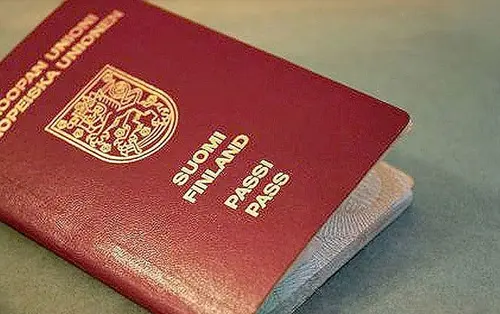
Child Custody in Finland: What Ukrainian Parents Need to Know
Child custody in Finland (huoltajuus) means the duty to care for a child, raise the child, and decide the child’s affairs. It does not automatically pass to the parent with whom the child lives: after a divorce, the parents themselves agree on joint or sole custody.
During a divorce, four matters must be agreed: where the child will live, who will be the custodian, how contact will be arranged, and what child support will be paid. The agreement may be confirmed by a child welfare supervisor (lastenvalvoja), and it will have the force of a court decision.
Our experience at International Law Firm "Zahist" shows that Ukrainian families most often make mistakes because of oral agreements and unfamiliarity with local procedures. Below we explain what parents from Ukraine need to know about child custody in Finland.
What child custody means under Finnish rules
A custodian cares for the child, raises the child, and makes decisions concerning the child’s affairs. In addition, a custodian has the right to receive information about the child from institutions.
| Form of custody | What this means in practice |
| Joint custody | Both parents jointly decide the main issues in the child’s life |
| Sole custody | One of the parents makes decisions independently, and the school or daycare provides information only to that parent |
Under joint custody, the parents together decide matters concerning the child’s name, place of residence, upbringing, language, religion, education, and medical care. The consent of both parents is also required to obtain a passport for the child.
If the children live with one of the parents, the other parent may still make decisions concerning care while the child is with that parent. This is important to take into account when allocating roles.
The child’s place of residence and contact with the other parent
The law allows only one official place of residence of the child. During a divorce, the parents agree which of their homes it will be. This decision affects child benefit, housing allowance, and the choice of school.
In practice, the child may also live part of the time with the other parent. The official address determines to whom child benefit is paid and how the housing allowance from Kela is taken into account.
- The child lives with one parent and visits the other on weekends and for part of the holidays
- A child under a few years of age meets the other parent only during the day
- The child spends approximately equal time with each parent, while the official address remains one
- The contact schedule is set out in a written agreement or agreed separately each time
The child has the right to maintain contact with both parents. If problems arise with contact, you may contact a child welfare supervisor, who will arrange a meeting of the parents. If you are concerned about the child’s safety during a visit, share your concerns with the social services.
Child support and maintenance of the child after divorce
Both parents are responsible for maintaining the child until the age of 18, even if they no longer live together. The parent who does not live with the child pays child support (elatusapu) to the parent with whom the child lives.
| Issue | What needs to be agreed |
| Amount of child support | The sum and the payment procedure |
| Residence | With whom the child officially lives |
| Contact | The schedule and place of contact |
| Custody | Joint or sole |
The amount of child support depends on the child’s needs and the parents’ means, and it is determined individually. If a dispute arises between the parents, it is resolved by the court taking into account the best interests of the child.
Joint or sole custody: how to choose the best option
The law does not make joint custody mandatory, nor does it give preference to sole custody. The parents themselves decide what suits their family, and the matter is always considered through the lens of the child’s interests.
| Criterion | Joint custody | Sole custody |
| Decisions concerning the child | Made together | Made by one of the parents |
| Information from institutions | Received by both | Received only by the custodian |
| Child’s passport | Consent of both is required | Arranged by the custodian |
| Requirements for the parents | Ability to reach agreement | Suitable when cooperation is impossible |
Joint custody works only when the parents are able to reach agreement. If communication between them is extremely strained, sole custody sometimes seems simpler, but it limits the rights of the other parent.
What the court takes into account when considering a dispute concerning a child
If the parents have not reached agreement even after mediation, the matter is decided by the district court. It takes into account the best interests of the child and the child’s own views, so it is important to prepare in advance.
- The child’s living conditions with each of the parents
- Each parent’s ability to care for the child and to support the child’s contact with the other parent
- Stability of the child’s life: school, daycare, friends, language
- The child’s own views, taking into account the child’s age
- Documents confirming income and expenses for the child
The court does not punish one of the parents; it seeks a solution that causes the least harm to the child. Aggressive tactics therefore usually harm a party’s position rather than help it.
Child custody in Finland: specifics for Ukrainian parents
Ukrainian families face additional difficulties that local families do not. These concern travel with the child, the child’s documents, and recognition of agreements in Ukraine.
- Travel to Ukraine with the child: without the custodian’s consent, this may be an offence if the child is under 16
- The child’s passport: under joint custody, the consent of both parents is required
- One of the parents has remained in Ukraine: contact with the child and service of documents must be taken into account
- Documents from Ukraine: the birth certificate requires an apostille and a certified translation
- Change of the child’s surname: after divorce it remains the same; a change is arranged through the DVV
Taking a child under 16 abroad without the custodian’s consent, or failing to return the child to Finland, is regarded in Finland as child abduction and is a criminal offence. Any trips are therefore best agreed in writing.
What documents are needed to formalise an agreement concerning the child
Before contacting a child welfare supervisor or the court, prepare a basic set of documents. It will help prove your status and your connection with the child.
| Document | Why it is needed |
| The child’s birth certificate | Confirms parentage and parenthood |
| Identity documents of the parents | Identification of the parties |
| Written agreement | Basis for confirmation as to custody, residence, and child support |
| Proof of address | Determines the child’s official place of residence |
| Income information | Required for calculating child support |
If the documents were issued in Ukraine, they must be legalised and translated. Without this, the authority may refuse to accept them for consideration, and the case will be delayed for weeks.
Typical mistakes parents make regarding custody in Finland
Below are the mistakes that occur most often. Each of them could have been avoided with proper preparation.
- Relying on oral agreements and not having them approved
- Assuming that custody automatically passes to the parent with whom the child lives
- Traveling abroad with the child without the other guardian’s consent
- Failing to take into account that a child officially has only one address
- Not seeking mediation before a court dispute begins
- Failing to prepare documents in Ukrainian with an apostille and a translation
Each of these mistakes means delays, additional costs, and stress. Travel with a child and document issues are particularly risky. Before each step, it is better to check the requirements and keep written confirmation of the agreements.
Why it is difficult to resolve custody matters on your own
It may seem that agreeing between yourselves is enough. However, in mixed and Ukrainian families, the procedure has many pitfalls.
- Finnish terminology and document forms are unfamiliar
- It is difficult to understand what the child welfare supervisor approves and what the court decides
- Emotional pressure makes it harder to make balanced decisions
- Travel to Ukraine and the child’s documents create additional risks
- An incorrect agreement is later difficult to change
That is why more and more Ukrainian parents seeking an answer to questions about child custody turn to lawyers even before signing an agreement.
On your own or with International Law Firm "Zahist": a comparison
The difference between the two approaches is best seen in a comparison.
| Parameter | On your own | With International Law Firm "Zahist" |
| Choice of custody arrangement | Based on forum advice | Analysis of the situation and the child’s interests |
| Agreement | Oral or incomplete | Written agreement and approval |
| Dispute with the other parent | Emotional negotiations | Position, mediation, and preparation for court |
| Travel with the child | Risk of breaking the rules | Explanation of the requirements and consent |
| Documents from Ukraine | Often missing an apostille or a translation | Preparation and review of the document set |
We do not guarantee a decision by the court or other authorities, as the final word remains with them. However, proper preparation significantly reduces the risks.
How International Law Firm "Zahist" helps parents with custody matters
We work according to a clear plan so that you always understand what is happening in your case.
- Analysis of the situation: citizenship, place of residence, children, and existing agreements
- Determining the optimal form of custody and the child’s place of residence
- Preparing a written agreement on contact and child support
- Support with approval by the child welfare supervisor
- Preparation for mediation or court proceedings if there is a dispute
- Assistance with an apostille and translation of Ukrainian documents
- Explanation of the rules for traveling abroad with a child
At every stage, you know what is happening and are not left alone with the bureaucracy. This is especially important when children are involved.
Legal assistance with child custody matters
Do not delay seeking advice, because agreements reached at the start of a divorce are later difficult to change. The earlier you begin, the easier it is to avoid conflict.
Contact the lawyers of International Law Firm "Zahist" and we will help settle child custody in Finland with your child’s interests in mind.