










Legalization of Ukrainians in Europe

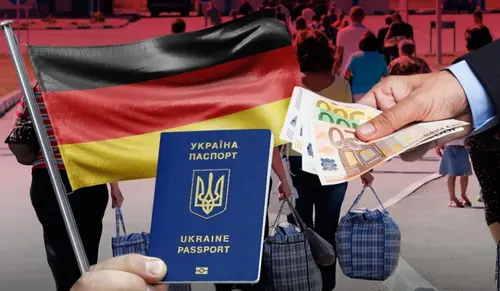
Legalization is the general process of obtaining lawful grounds to stay in European countries: temporary protection, a residence permit, or citizenship. Each status grants a different scope of rights, so it is important to understand which option fits a particular situation. "Zahist" Law Firm's lawyers assess each client's circumstances and choose the shortest lawful path to legalization — from the first application to obtaining a passport.
For most Ukrainians, the simplest route to legalization is temporary protection, which applies across the EU until 4 March 2028 and does not require a complex procedure. However, this is a temporary solution, so more and more people are moving toward more permanent statuses — a national residence permit or citizenship — especially after Ukraine adopted its law on multiple citizenship.
Ways to legalize your stay in Europe: the main options
Legalization in Europe follows several typical scenarios, and each of them has its own requirements, timeframes, and scope of rights. Understanding the differences helps plan documents in advance and avoid wasting time on a procedure that does not suit a particular situation.
- Temporary protection — a simplified collective status for Ukrainian citizens for the duration of the war.
- A residence permit based on employment, study, or family reunification.
- The asylum procedure for people who do not qualify for temporary protection.
- Long-term EU resident status after several years of lawful stay.
- Naturalization and acquiring citizenship as the final stage of legalization.
The choice of a specific route depends on the purpose of the stay, the documents already available, and how long a person plans to remain in the chosen country. Our experience shows that clients who start with the correctly chosen status complete the entire legalization path several months faster.
Temporary protection as the first step toward legalization
For most Ukrainians, legalization begins with temporary protection, since this status is granted quickly and without a complicated set of documents. Besides speed, its advantages include a minimal document list and no interview, which other statuses often require.
We covered the eligibility conditions, required documents, and the new 2026 rules in more detail in the article “Registering temporary protection for Ukrainians in Europe”.
However, temporary protection has a limited validity period and does not always open the way to permanent residence, so it is worth considering other legalization options in parallel. That is why some clients contact us already at the temporary protection stage to plan the transition to a long-term status right away.
Obtaining a residence permit: moving to a long-term status
A residence permit is a national document issued by a specific country, and obtaining a residence permit opens the way to long-term or permanent residence. Unlike temporary protection, which operates under a joint EU decision, a residence permit is governed exclusively by the national law of a particular state.
We covered the grounds, document requirements, and a country comparison in detail in the article “Obtaining a residence permit for Ukrainians in Europe”.
Years spent under temporary protection are usually not automatically counted toward the residence period required for a residence permit, so it is worth starting the national-permit route to legalization in advance. Specialists recommend filing residence permit documents ahead of time, rather than waiting for temporary protection to expire.
Citizenship as the ultimate goal of legalization
Citizenship is the highest stage of legalization, granting the full scope of rights on par with the country's own citizens, plus consular protection with no time limit. It is also the only status that allows voting in local and national elections of the chosen country.
We described the naturalization requirements, costs, and timeframes in the article “Obtaining citizenship for Ukrainians in Europe”.
After Ukraine adopted its law on multiple citizenship, more and more clients are pursuing legalization with a permanent European passport specifically in mind. At the same time, each state independently decides whether to recognize a second citizenship or require renunciation of the previous one.
Comparing legalization statuses in Europe: a table
Before choosing a specific legalization route, it is worth comparing the main statuses by validity period, scope of rights, and further prospects.
| Status | Validity period | Scope of rights | What comes next |
| Temporary protection | until 4 March 2028 | work, healthcare, education, housing | transition to a residence permit or citizenship |
| Residence permit | 1–3 years, renewable | work, study, family reunification | long-term residence or naturalization |
| Asylum | until a decision is made | limited rights while the case is pending | refugee status recognition or refusal |
| Citizenship | indefinite | full scope of citizens' rights | final legalization |
The timeframes in the table are approximate: the actual duration depends on the country, the grounds for application, and the workload of the migration service. Before filing an application, it is also worth checking whether requirements have changed following the latest reforms of migration legislation.
The asylum procedure is chosen mainly by those who did not manage to register for temporary protection or who arrived from a third country without a simplified status.
How much legalization in Europe costs and how long it takes
The cost of legalization depends on the chosen status: temporary protection is mostly granted free of charge, while a residence permit or citizenship requires paying a state fee, translations, and document legalization.
Timeframes also vary significantly — from a few weeks for temporary protection to several years for the full cycle from the first permit to a passport.
A step-by-step legalization algorithm: from the first application to permanent status
Regardless of the chosen status, the path to legalization in Europe runs through several consecutive stages.
- Assessing the situation and choosing the shortest lawful legalization route.
- Gathering the basic document package: passport, proof of address, photos.
- Applying to the migration service or consulate of the chosen country.
- Obtaining a temporary status and accumulating a period of lawful residence.
- Moving to a long-term residence permit or filing a citizenship application.
Skipping or incorrectly completing even one stage often leads to lost time and having to repeat the procedure. That is why every stage is worth coordinating with a lawyer who knows the current requirements of the specific country.
Documents you will need for legalization
Despite the differences between statuses, most legalization procedures rely on a similar basic set of documents.
- A Ukrainian international or domestic passport.
- Documents confirming the place of residence or the purpose of the stay.
- Proof of income, employment, or study in the chosen country.
- Notarized translations of documents into the official language.
- Standard-format photographs and completed migration service application forms.
The complete list of documents for legalization should always be checked for the specific country, as requirements change periodically. Some states also require legalization of Ukrainian documents through an apostille or consular certification.
Legalization of children and family reunification
Children usually receive the same status as their parents, but the procedure for each family member is completed as a separate document package.
Family reunification is a separate ground for legalization that allows a person to join a relative who already legally resides in the chosen European country.
Legalization for students, entrepreneurs, and IT professionals
Certain categories of applicants can choose specialized legalization grounds: a study visa followed by a transition to a work residence permit, a permit for business owners, or simplified programs for IT professionals available in some European countries.
Such routes often involve lower residence-period requirements but instead require proof of qualification, a diploma, or business registration.
Poland and the Czech Republic have special business permits for entrepreneurs, while Germany offers the EU Blue Card for qualified professionals with a confirmed higher education degree.
Renewing and losing legalization status
Every legalization status must be renewed on time: temporary protection usually once a year, a residence permit according to the schedule set by the specific country, while citizenship does not require renewal once obtained.
A status can be lost due to a prolonged absence from the country, criminal proceedings, or submitting knowingly false information during the application process.
Common mistakes during legalization and how to avoid them
Our experience shows how best to appeal a legalization refusal: the cause is most often a technical error rather than a lack of grounds for obtaining the status.
- Submitting an incomplete document package or outdated certificates.
- Missing the deadline for filing a status renewal application.
- Errors in translating a name or date of birth between documents.
- Failing to prove continuous residence in the country.
- Filing independently without accounting for local legal specifics.
Compared with self-managed attempts, turning to legal support for legalization significantly reduces the risk of refusal due to formal shortcomings. Lawyers check every document in advance to rule out the typical reasons for refusal.
Legalization without temporary protection: alternative routes
Some Ukrainians left for Europe after the temporary protection registration period had already ended, or deliberately choose a different route — for example, through an existing employment contract or a study invitation.
In such cases, legalization proceeds through the standard national residence-permit procedure or, if needed, through the asylum procedure.
Legalization in Poland, Germany, the Czech Republic, and other European countries
"Zahist" Law Firm supports legalization through its offices in Poland, France, Finland, the Netherlands, Germany, and the Czech Republic, and in each of these countries the procedure has its own specifics.
Each state sets its own application review timeframes, list of authorities, and document translation requirements, so there is no universal algorithm that fits everyone at once. That is why every legalization case requires an individual analysis of the client's specific situation.
Frequently asked questions about legalization for Ukrainians in Europe
How long does legalization in Europe take? Temporary protection is granted within a few days, a residence permit within a few weeks to a few months, and the full path to citizenship can take five to ten years.
Can I hold temporary protection while preparing residence permit documents at the same time? Yes, the legislation of most countries allows applying for a residence permit in parallel, without waiting for temporary protection to expire.
What should I do if my legalization application is refused? A refusal can be appealed through administrative or judicial proceedings, and "Zahist" Law Firm's lawyers help prepare an appeal based on the specific reason for refusal.
Do I need to return to Ukraine during the legalization process? Mostly no: most procedures can be completed while staying in the host country, although some certificates have to be ordered remotely through Ukrainian services.
Legal support for legalization: "Zahist" Law Firm's experience
Over the years, we have helped thousands of Ukrainians go through the legalization process — from temporary protection to a residence permit and citizenship — and the vast majority of clients report less stress compared with trying to figure out foreign legislation on their own.
In 2025 alone, we handled more than 4,000 applications for various legalization statuses in the six European countries where the company's offices operate.
If you are only planning legalization in Europe or want to move from temporary protection to a permanent status, "Zahist" Law Firm's lawyers support the process at every stage.