Family Reunification in Finland: Conditions and Procedure for Ukrainians

Family reunification in Finland takes place through an application for a residence permit on the basis of family ties submitted to the Finnish Immigration Service, Migri. A relative who already lives in Finland is called the sponsor. The main conditions depend on the sponsor’s status and on who is coming to Finland.
New rules have been in force since 16 June 2025. Spouses must be at least 21 years old (the age requirement does not apply if the sponsor is a Finnish citizen). For relatives of persons with temporary protection, the two-year residence requirement does not apply, but an income requirement applies to minor sponsors.
Our experience at International Law Firm "Zahist" shows that Ukrainian families most often make mistakes not in the list of documents, but in the choice of grounds and the consequences for their status. Below we explain how to reunite a family in Finland and what to expect.
Who can apply for family reunification in Finland
A residence permit on the basis of family ties may be granted to family members of a person who is lawfully residing in Finland. The sponsor may be a Finnish citizen or a foreign national holding a residence permit.
| Family member | What you need to know |
| Husband or wife | Both must be at least 21 years old, unless the sponsor is a Finnish citizen |
| Cohabiting partner or registered partner | Applications are submitted under the same rules as for spouses |
| Minor child | The application is submitted by one of the parents or a guardian |
| Other relatives | Considered under stricter conditions and in individual cases |
If the spouses have children in common under joint custody, an application as parents may be submitted even if one of them is under 21. This is an exception to the age limit.
Family reunification conditions for persons with temporary protection
Ukrainians in Finland generally hold a residence permit on the basis of temporary protection. For them, Migri applies a special regime that differs from the rules for refugees.
| Condition | Temporary protection | Asylum or subsidiary protection |
| Sponsor’s two-year period of residence | Not required for family members and other relatives | Required for certain categories |
| Income requirement | Applies if the sponsor is a minor | Depends on status and when the family was formed |
| Age of a minor sponsor | Must be under 18 at the time the relative’s application is submitted | Separate rules depending on status |
In exceptional cases, the requirements may be waived if there are particularly serious grounds or if it is in the best interests of the child. Each family’s situation is therefore considered individually.
Documents for family reunification in Finland
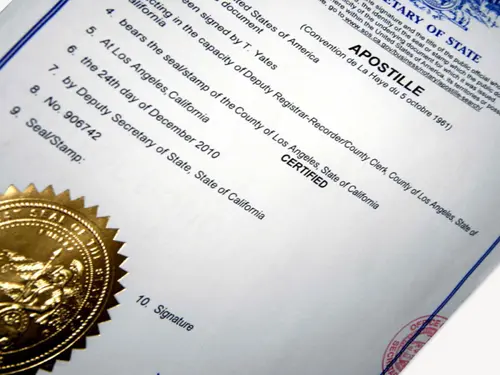
The main purpose of the documents is to prove the family relationship and compliance with the conditions. Ukrainian documents usually require an apostille and a certified translation.
- Marriage certificate or the child’s birth certificate
- Passports or other documents of the applicant and the sponsor
- Proof of the sponsor’s status in Finland
- Proof of income, if required
- Proof of residence or housing arrangements
- Certified translations of the documents
Errors in the spelling of names or dates in the documents lead to additional requests. Before submitting the application, check all details against the passports.
Submitting an application from Ukraine and from third countries
An application for a residence permit on the basis of family ties is usually submitted before the relative arrives in Finland. Family members must prove their identity and complete biometric registration.
- The applicant submits the application online or through an authorised authority
- The applicant visits a designated authority to provide fingerprints and a photograph
- The sponsor in Finland confirms their details through the Migri service
- After a decision is issued, the relative receives the permit and may enter the country
The exact procedure depends on the country where the applicant is located and on whether an embassy or visa centre is operating there. Check the available options and appointment times in advance.
Children, parents and other relatives: separate reunification rules
Migri applies different conditions to children, parents and more distant relatives. As a rule, it is simplest to obtain a permit for a minor child of parents who already reside in Finland.
- Minor child: the application is submitted by one of the parents or a guardian who has custody rights
- Spouses: a marriage certificate and compliance with the age limit are required
- Cohabiting partner: you must prove that you live together as a couple
- Other relatives: the conditions are stricter, and a permit is not always granted
- Parents of a minor sponsor with temporary protection: a sufficient level of income is required
If a sponsor with temporary protection is a minor, their relatives must meet the income requirement. This requirement may be waived only in exceptional cases or in the best interests of the child.
What to do if Migri refuses family reunification
A refusal is not always final. A Migri decision may be appealed to an administrative court, and the time limits and procedure are stated directly in the decision.
Appeal deadlines are short, so do not delay seeking advice. Also consider whether it would be better to submit a new application if the reason for the refusal can be remedied more quickly.
Rights of family members after the permit is granted
Once a residence permit on the basis of family ties is granted, new opportunities open up for family members. However, the exact scope of rights depends on the type of permit and the sponsor’s status.
| Area | What to pay attention to |
| Residence | The permit is issued for a fixed period and is then extended |
| Work | The right to work depends on the type of permit |
| Social services | Depend on status and registration in the municipality |
| Children | The right to early childhood education and schooling according to the place of residence |
Before changing the grounds for residence, compare which rights you lose and which you gain. This is especially important for those who already have temporary protection and receive other services.
Family reunification and a change of grounds for residence: what to consider
From 12 June 2026, a person with temporary protection may hold only one residence permit. If you are granted a new permit on another ground, the temporary protection permit ends automatically, and that decision cannot be appealed.
| Situation | Consequence |
| New permit issued before 12 June 2026 | According to Migri, the temporary protection permit ended on 12 August 2026 |
| New permit issued after 12 June 2026 | The temporary protection permit ends when the new permit is issued |
| Change of grounds | The right to reception services under temporary protection also ends |
Before applying for a residence permit on the basis of family ties, it is therefore important to assess whether a change of grounds is advantageous. This applies both to the sponsor and to family members who already have temporary protection.
Common mistakes in family reunification in Finland
The mistakes that occur most often are listed below. Each of them may lead to a refusal or a delay.
- Filing an application without taking the age limit for spouses into account
- Failing to check the income requirement if the sponsor is a minor
- Not taking into account that a new permit may end temporary protection
- Submitting documents without an apostille or a certified translation
- Allowing discrepancies in the spelling of names across different documents
- Relying on outdated rules from before the changes in 2025 and 2026
The choice of ground and the issue of a change of status are particularly risky. It is better to discuss them with a lawyer before filing the application, as they are difficult to correct later.
Why it is difficult to reunite a family on your own
It may seem that filling in an online application is enough. However, the rules changed in 2025 and 2026, and Ukrainian families have particular circumstances.
- The rules depend on the sponsor’s status and when the family was formed
- It is difficult to assess the consequences of a change of ground for temporary protection
- Apostilles and translations from Ukraine are required
- Information is available in official languages and on the websites of different authorities
- An error in the application leads to a refusal and additional costs
That is why more and more Ukrainian families planning family reunification in Finland turn to lawyers even before filing an application.
On your own or with International Law Firm "Zahist": a comparison
The difference between the two approaches is best seen in a comparison.
| Criterion | On your own | With International Law Firm "Zahist" |
| Choice of ground | Based on advice from forums | Analysis of the family’s status and risks |
| Documents | Risk of missing requirements | Review of completeness and translations |
| Change of status | Consequences are underestimated | Assessment of the impact on temporary protection |
| Application to Migri | In person, sometimes in a language you do not speak | Preparation and support |
| Refusal | Difficult to appeal | Preparation of an appeal |
We do not guarantee decisions by public authorities, as the final word remains with them. However, proper preparation significantly reduces the risk of refusals.
How International Law Firm "Zahist" assists with family reunification
We work according to a clear plan so that you always understand what is happening in your case.
- Analysis of the situation: the sponsor’s status, family composition, age, and available documents
- Choice of ground and assessment of the consequences for temporary protection
- Preparation of the list of documents and translations
- Assistance with the apostille and certified translation
- Preparation and filing of the application with Migri
- Support during additional requests
- Appeal against the decision in the event of a refusal
At every stage, you know what is happening and are not left alone with the bureaucracy. This is especially important when it comes to reunification with children or a spouse.
Legal assistance with family reunification
Do not postpone preparation, as the rules often change and an error in the choice of ground is costly. The sooner you start, the more options you will have.
Contact the lawyers of International Law Firm "Zahist" and we will help you carry out family reunification in Finland taking into account your situation and the interests of the children.