








Legalization of Ukrainian Documents for Finland: Apostille and Translation

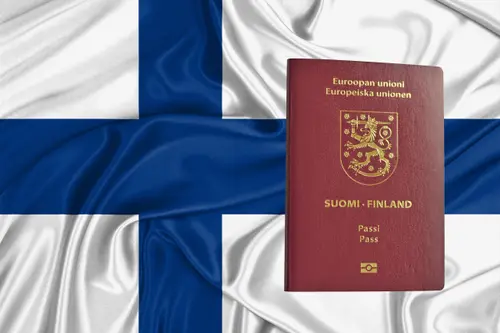
Legalization of Ukrainian documents for use in Finland means confirmation that a document is genuine and was issued by an authorized body. For Ukraine, an apostille is usually sufficient, and consular legalization is required only in specific cases.
Finnish authorities, including the DVV, accept originals or reliably certified copies in Finnish, Swedish, or English. A translation by an authorized translator in Finland does not require additional legalization. Other translators may need it.
Our experience at International Law Firm "Zahist" shows that most difficulties arise from confusion between an apostille, consular legalization, and certification of copies. Below we examine the document legalization procedure and explain how to avoid mistakes at each stage.
Three forms of confirmation: apostille, consular legalization, and exemption
The term “legalization” covers several procedures. Which one is required depends on the country of issue, the country of use, and international treaties.
| Form | Substance | When it applies |
| Apostille | A stamp or a separate sheet issued by the competent authority of the country of issue | Between states parties to the 1961 Hague Convention |
| Consular legalization | Confirmation through a consulate | If an apostille is not effective between the countries |
| Exemption from legalization | The document is accepted without confirmation | Under treaties or special rules, for example for documents of EU countries |
For Finland and Ukraine, the apostille system applies, so consular legalization is usually not required. However, individual authorities may have their own requirements, and these should be checked.
Which Ukrainian documents need to be legalized for Finnish authorities
The DVV requires legalization of foreign documents unless they fall within the exceptions. These include public documents of EU countries and certificates from Nordic countries. Ukraine does not fall within these exceptions.
- Certificates of marriage, divorce, and birth
- Documents on education, qualifications, and length of service
- Certificates of no criminal record
- Powers of attorney and other notarial documents
- Court judgments and extracts from registers
The final list depends on the purpose of submission. For example, the DVV, the Finnish Immigration Service, and an employer may require different sets of documents.
Ukrainian documents by purpose of submission: what to prepare
It is more practical to plan preparation not by the name of the procedure, but by the situation in which the document will be needed. Below is an indicative table.
| Purpose | Typical documents | What to pay attention to |
| Marriage registration | Passport, certificate of marital status | Apostille and translation, currency of the certificate |
| Registration of a child | Birth certificate | Consistency of names in the documents |
| Family reunification | Marriage and birth certificates | Finnish Immigration Service requirements as to format |
| Employment and studies | Diploma, supplements, certificates | The authority that affixes an apostille to education documents |
| Court or notary | Powers of attorney, judgments, extracts | Periods of validity and certification |
Before submission, check the requirements of each authority separately. This helps avoid a situation in which a document is acceptable in one place and rejected in another.
Originals, copies, and their certification
The DVV accepts only an original or a reliably certified copy. An ordinary photocopy or scan is not sufficient, so the issue of certifying copies must be resolved in advance.
- Original document with an apostille
- Copy certified by the authority that issued the original
- Copy of a legalized document certified by a notary in the country of issue
- Duplicate of the document if the original has been lost
If you need to keep the original, obtain a certified copy before sending it. After dispatch, it will be difficult to correct this.
Ukrainian documents abroad: who affixes an apostille in Ukraine
In Ukraine, an apostille is affixed by different authorities depending on the type of document. It is important to know this so as not to waste time looking for the right authority.
| Type of document | Authority |
| Civil status records, notarial and court documents, extracts from registers | Ministry of Justice |
| Education documents | Ministry of Education and Science |
| Other official documents, including certificates of criminal record | Ministry of Foreign Affairs |
The Ministry of Justice also issues an electronic apostille with a unique identifier and a QR code. Whether a Finnish authority will accept it must be checked separately.
Finnish documents for use in Ukraine: the reverse direction
Sometimes documents issued in Finland need to be used in Ukraine. The reverse logic then applies: a Finnish document requires an apostille in Finland and a translation into Ukrainian.
In Finland, an apostille on Finnish documents is issued by the DVV. Finnish missions abroad do not do this, so it is better to plan the procedure while still in Finland.
When legalization is not required: exceptions and simplified regimes
Not every document requires an apostille. Finnish rules provide for several exceptions, and knowing them helps save time and money.
| Case | What this means in practice |
| Public document of an EU country | Accepted without an apostille under special rules |
| Certificate from a Nordic country | Legalization is not required |
| Authorized translator in Finland | Their translation does not need to be legalized |
| Official translator in another EU country | Their translation also does not need to be legalized |
| Person with refugee status in Finland | An exception may apply and is checked separately |
For Ukrainian documents, these exceptions rarely apply, since Ukraine is not a member of the EU. However, the exception for refugee status and the rules on translators may be useful.
How to check the completed set and retain evidence of submission
Before submission, it is useful to go through the set against a checklist. This helps identify errors before the authority does.
If the authority returns the documents with a request, respond within the prescribed time limit. Do not delay providing additional documents, as missing the deadline may result in a refusal.
What to do if a Finnish authority has not accepted the documents
A refusal to accept a document does not always mean the end of the matter. In most cases, the reason can be remedied and the set resubmitted.
Keep all correspondence with the authority. It may be needed if the matter proceeds to an appeal or explanations.
Typical mistakes when legalizing documents for Finland
Below are the mistakes that occur most often. Each of them could have been avoided.
- Confusing an apostille with certification of a copy or notarization
- Submitting a scan or an ordinary photocopy
- Failing to check the requirements of the specific authority
- Ordering a translation from a translator who lacks the required status
- Allowing discrepancies in the spelling of names
- Failing to take into account the time required to obtain an apostille and a translation
Each mistake means repeat applications and additional costs. A mismatch between the name in the translation and in the passports is particularly risky.
Why it is difficult to complete the procedure on your own
It may seem that affixing a stamp is enough. However, the requirements depend on the authority, the type of document, and the applicant’s status.
- The rules vary depending on the authority
- The apostille has to be obtained in Ukraine while you are abroad
- It is difficult to choose a translator who meets the requirements
- A mistake leads to a refusal and the need to prepare the documents again
- Information is scattered across different websites
That is why more and more Ukrainians preparing document legalization for Finland turn to lawyers even before the procedure begins.
On your own or with International Law Firm "Zahist": a comparison
The difference between the two approaches is best seen in a comparison.
| Parameter | On your own | With International Law Firm "Zahist" |
| List of documents | Based on advice from the internet | An individual list tailored to the authority |
| Apostille in Ukraine | Difficult to arrange from abroad | Assistance with a power of attorney and oversight |
| Translation | Risk of choosing the wrong translator | Recommendations and review |
| Copies and originals | Easy to make a mistake with certification | Completeness check |
| Interaction with authorities | In person, sometimes in a foreign language | Support at every step |
We do not guarantee decisions by public authorities, as the final word remains with them. However, proper preparation significantly reduces the risk of refusals.
How International Law Firm "Zahist" assists with document legalization
We work according to a clear plan so that you always understand what is happening in your matter.
- Analysis of the situation: which authority, what purpose, and which documents are already available
- Determining the form of confirmation: an apostille, a certified copy, or other options
- Assistance with a power of attorney and an apostille in Ukraine
- Identifying the translation requirements and reviewing the completed translation
- Compiling the set of documents and checking that it is complete
- Support with submission to the DVV, Migri, or another authority
- Preparing explanations or an appeal in the event of a refusal
At every stage, you know what is happening and are not left alone with the bureaucracy. This is especially important when the documents are needed urgently.
Legal assistance with legalization for Finland
Do not postpone preparation until the moment when the documents are urgently needed. The earlier you start, the lower the risk of delays.
Contact the lawyers of International Law Firm "Zahist" and we will help you carry out the legalization of Ukrainian documents for use in Finland and prepare the correct set of documents.