







Obtaining Citizenship for Ukrainians in Europe
Citizenship of a European country is the highest legal status for a foreigner, granting a full set of rights on par with the citizens of the state: the right to vote, unrestricted entry and exit within the EU, and consular protection without a time limit. Obtaining citizenship is usually possible only after several years of legal residence on a temporary residence permit or permanent residence permit. The lawyers of Law Firm "Zahist" analyze the client's situation and select the shortest legal path to naturalization.
On January 16, 2026, a law on dual citizenship came into effect in Ukraine, allowing Ukrainians to obtain a passport from another state without automatically losing their Ukrainian citizenship in specified cases. However, each European country independently decides whether to recognize dual citizenship or require renunciation of the previous one, so conditions should be checked separately for each state.
Main conditions for obtaining citizenship in European countries
Despite national differences, most European countries have a similar basic set of requirements for citizenship applicants. Firstly, this includes continuous legal residency, language proficiency, and proof of stable income or housing.
Before submitting an application, it is essential to ensure that a complete list of documents for naturalization has been gathered, as technical errors often become the reason for refusals.
- Continuous legal residence from 3 to 10 years depending on the chosen country and type of permit.
- Proficiency in the official language at a level required by the specific state.
- Passing a test on integration, history, culture, or basics of local legislation.
- Proof of stable income, legal housing, and absence of criminal records.
- No tax debts or violations of migration rules.
The complete list of documents for naturalization varies by country, so specific requirements should be clarified with the local migration service.
Certain categories of applicants—investors, individuals with confirmed ethnic background, or recognized specialists—may qualify for a simplified citizenship acquisition process in some countries.
Dual citizenship: what has changed for Ukrainians
Previously, acquiring foreign citizenship essentially meant losing Ukrainian citizenship, which led many people to postpone naturalization despite years of living abroad. Now, with Ukraine recognizing dual citizenship in specified cases, the number of applicants for passports from European countries is naturally increasing.
Our experience shows: before submitting an application, it is advisable to check whether the chosen state recognizes dual citizenship, and whether a specific life situation falls under the new law.
Cost and time for obtaining citizenship
Obtaining citizenship always involves expenses: state fees, translation of documents, legalization of certificates from Ukraine, and, if necessary, apostille. In most European countries, the fee ranges from several dozen to several hundred euros, and the processing of the application takes from six months to two years.
Payment is usually made directly at the consulate or migration service, and payment confirmation must be included in the document package along with the application.
Applications often require notarized translations of birth certificates, certificates of no criminal record from Ukraine, and documents confirming continuous residence throughout the entire period. Our experience shows that an incomplete package of translations is one of the most common reasons for delays in the citizenship application process.
Citizenship for Ukrainians in Poland, Germany, the Czech Republic, and other countries: comparative table
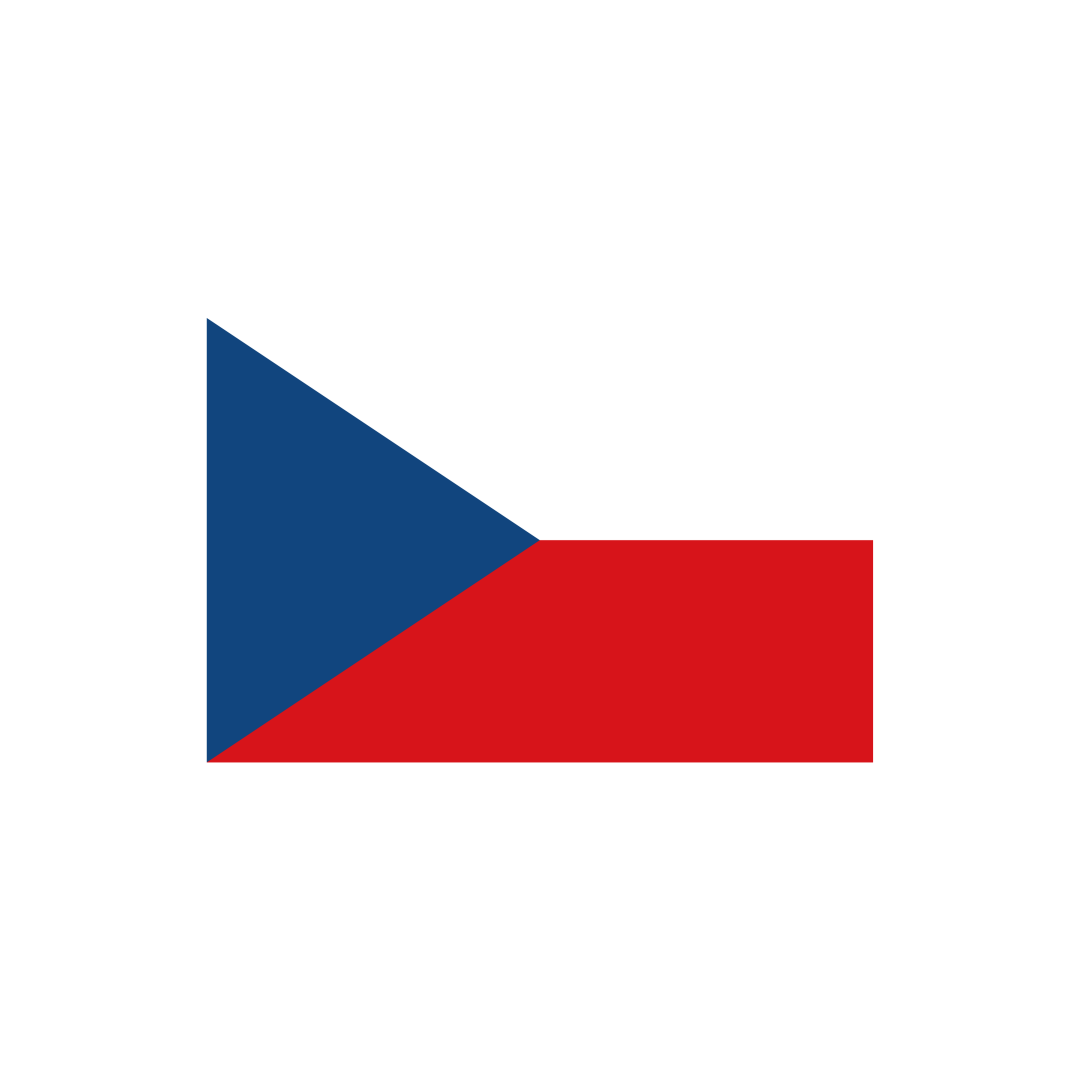
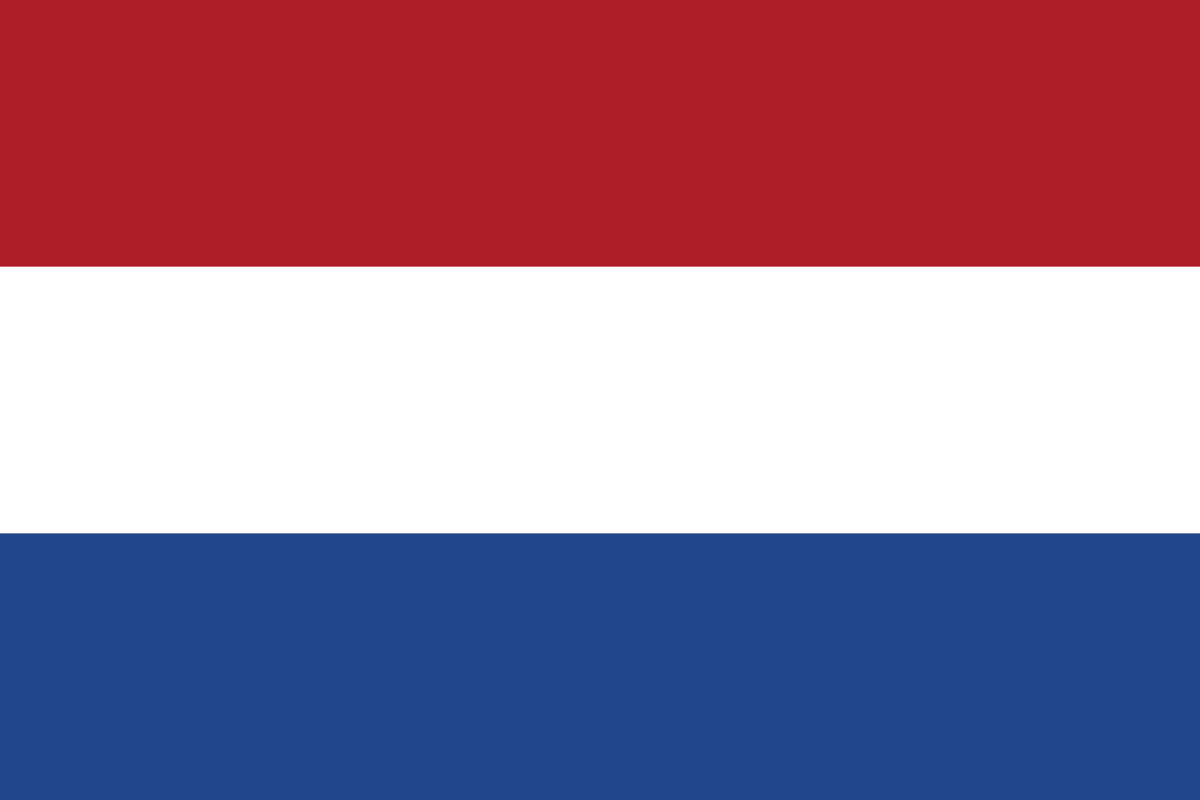
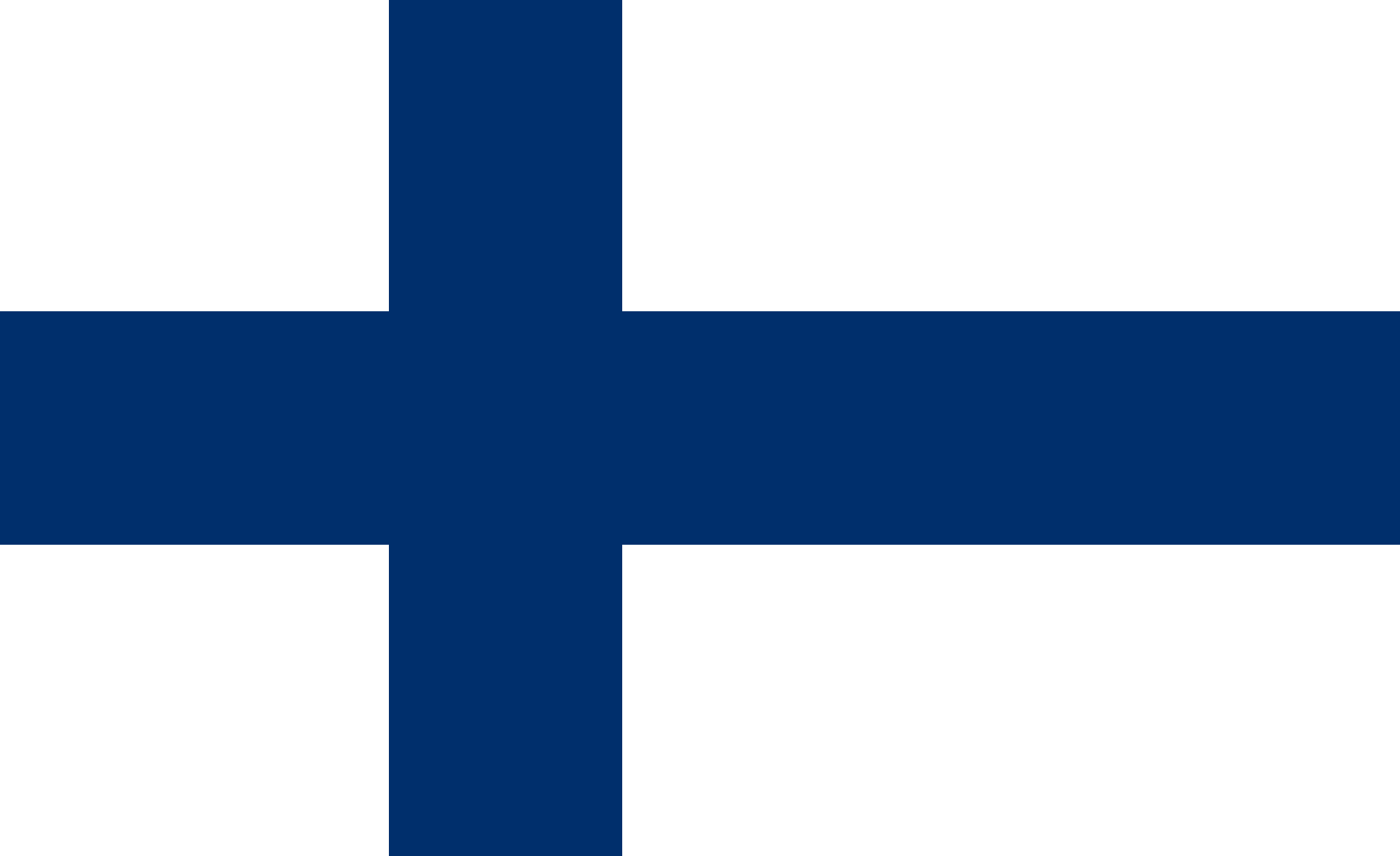
Law Firm "Zahist" assists with the citizenship application process in its offices in Poland, France, Finland, the Netherlands, Germany, and the Czech Republic, and the requirements in each of these countries significantly differ.
| Country | Length of residence | Language level | Dual citizenship |
| Poland | 3 years of continuous permanent residence | Polish language, basic level | allowed |
| France | 5 years of legal residence | French, B1 level | allowed |
| Germany | 5 years (according to the 2024 reform) | German, B1 level | allowed after reform |
| Czech Republic | 5 years of permanent residence | Czech language, basic exam | allowed since 2014 |
| Netherlands | 5 years of legal residence | Dutch, integration exam | usually requires renunciation of previous citizenship |
| Finland | 5 years of continuous residence | Finnish or Swedish language | allowed |
The timeframes listed in the table are approximate: the actual duration depends on the type of residence permit, the region of application, and the completeness of the documents.
Typical reasons for citizenship denial and how to avoid them
A citizenship denial can be appealed, but it is much easier to prevent typical mistakes at the document preparation stage.
- Breaks in continuous residence due to prolonged exits from the country.
- Insufficient level of proficiency in the official language during the interview.
- Criminal convictions or administrative offenses during the period of residence.
- Debts related to taxes, alimony, or utility payments.
- Discrepancies in personal data between Ukrainian and foreign documents.
The lawyers of Law Firm "Zahist" check the document package before submitting the application, so the vast majority of our clients receive a positive decision on their first attempt.
Citizenship for children and family reunification
Children typically acquire citizenship along with their parents or immediately after their parents obtain the right to naturalization, although the specific procedure depends on the country.
Marriage to a citizen of the country or the education of minor children in local schools often shortens the mandatory residence period by one or two years, so this should be considered when planning.
Most countries do not provide for automatic citizenship for children born in Europe: an application still needs to be submitted separately for each family member.
Step-by-step path to citizenship: from residence permit to passport
Obtaining a passport from a European country is a multi-year process that goes through several sequential stages.
- Obtaining a residence permit based on work, study, or family reunification.
- Extending the residence permit and accumulating continuous residence time.
- Obtaining a permanent residence permit or long-term EU resident status.
- Passing a language exam and a test on knowledge of the country.
- Submitting an application for citizenship and taking an oath after the decision is made.
In general, the entire journey from the first residence permit to passport takes from five to ten years, depending on the country and the grounds for residence.
Certain categories of applicants complete this journey more quickly: marriage to a citizen of the country, confirmed ethnic background, or specific investment programs can shorten the mandatory residence period by several years.
Legal support for obtaining citizenship: the experience of Law Firm "Zahist"
Our experience shows how to better appeal a denial of naturalization: the most common reasons are gaps in residency or an incomplete package of certificates, so it is crucial to check the documents before submission. Over the years, we have helped thousands of clients navigate the journey from residence permit to citizenship, and the vast majority note less stress compared to trying to understand foreign legislation on their own.
In just 2025, we assisted with over 900 applications for citizenship and permanent residence permits in six European countries where the company operates offices.
If you are planning to obtain citizenship or are just starting your journey with a residence permit, the lawyers of Law Firm "Zahist" in Poland, France, Finland, the Netherlands, Germany, and the Czech Republic accompany the process at every stage.