










Pole's Card in 2026: Who Can Obtain It and How

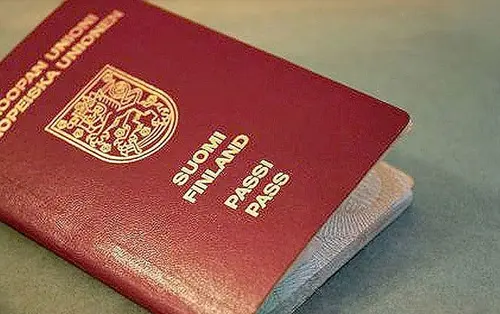
The Pole’s Card in 2026 is issued free of charge to anyone who proves Polish origin: at least one parent, grandmother or grandfather, or two great-grandparents must have been Polish. Basic Polish and knowledge of traditions are also checked. Documents are submitted to a consul in Ukraine or a voivode in Poland, and a decision is made within a period ranging from several weeks to three months.
The main thing that the Pole’s Card grants is work without a permit, free education, a D visa, permanent residence, and a path to citizenship. In our practice, a refusal is more often linked not to a lack of roots, but to a break in the chain of kinship or weak Polish. These two points must be checked before booking an appointment.
The Pole’s Card — what it is and what it grants
Under the Act of 7 September 2007, the Pole’s Card is a document confirming belonging to the Polish nation. It does not replace citizenship and does not, by itself, confer the right to cross the border or settle in Poland.
The main parameters of the card:
- the card is valid for 10 years, after which it may be extended;
- a holder over the age of 65 is issued the card for an indefinite period;
- if personal data change, a new card or a duplicate valid for 10 years is issued;
- the holder retains Ukrainian citizenship.
Now to the practical benefits of the status.
What benefits the Pole’s Card grants — rights and privileges
The card grants rights on an equal footing with Polish citizens in many areas. That is why the question of what benefits the Pole’s Card grants usually determines whether it is worth starting.
The card holder is entitled to:
- obtain a D visa free of charge;
- work without a work permit;
- conduct business on an equal footing with Polish citizens;
- study free of charge at higher education institutions;
- receive emergency medical care;
- obtain permanent residence without additional justification;
- receive a 37% discount on trains.
Another significant benefit is an accelerated path to citizenship.
The Pole’s Card: new rules for 2026 — what has changed
In February 2026, the Polish Ministry of Foreign Affairs published a draft law. Note: the Pole’s Card new rules will take effect only after the law enters into force, so the current version must be checked before filing.
The draft provides for:
- abolition of filing based on a certificate from a Polish organisation confirming three years of activity;
- refusal to issue the card to those who previously renounced Polish citizenship;
- a fee for examining the application (the procedure is currently free of charge);
- a one-time settlement payment instead of payments over nine months.
If the new rules are adopted, the sole basis will be a document confirming descent from Poles. If you have only an organisation’s certificate, we advise submitting the documents before the amendments enter into force.
Obtaining the Pole’s Card — who may apply
The topic of “obtaining the Pole’s Card” begins with checking the conditions set out in Article 2 of the Act. The applicant must consider themselves Polish and confirm this by a written declaration in the presence of a consul or a voivode.
To obtain the card, the following requirements must be met:
- know the Polish language at least at a basic level;
- know and observe Polish traditions;
- prove that one of the parents, grandmothers or grandfathers, or two great-grandparents, were Polish by nationality;
- not hold Polish citizenship.
Documents concerning roots do not have to be perfect: consuls accept various documents if, taken together, they logically demonstrate kinship.
Supporting documents are sought in regional archives, the archives of the Security Service of Ukraine and the Ministry of Internal Affairs, and parish registers. Sometimes the required document is kept in the family: a grandfather’s military ID or passport with the entry “Pole”. In our experience, an archive request stating the ancestor’s exact date and place of birth works faster than a general search.
The Pole’s Card without Polish roots — is it possible
Today the law also allows the card to be issued without proof of origin. Instead of documents concerning ancestors, a certificate from a Polish organisation confirming at least three years of work for the benefit of the Polish language and culture may be presented.
This route is still available, but the 2026 draft law proposes abolishing it. In our experience, consuls increasingly question holders of such documents about the organisation’s activities. Therefore, the option without documents on Polish roots is currently risky.
Who can definitely obtain the Pole’s Card — specific categories of applicants
The best chances of obtaining the card belong to applicants who have direct records of their ancestors’ nationality. For a favourable decision, archival documents play the key role.
The following persons may confidently apply to obtain the card:
- grandchildren and great-grandchildren of Poles recorded as such in the vital records of the Second Polish Republic;
- people whose parents or grandfathers are listed as Poles in Soviet passports or military IDs;
- descendants of deported or repressed Poles;
- children of card holders, if at least one parent files the application.
For all of them, the evidentiary basis is decisive.
Documents for obtaining the Pole’s Card — the full list
Preparing the documents for obtaining the Pole’s Card is the most labour-intensive stage. In the refusals that clients bring to us, the problem is almost always an incomplete or incorrectly prepared set of documents.
Applicants most often make the following mistakes:
- the chain of kinship is broken in one of the generations;
- ancestors’ surnames are spelled differently in different documents;
- the document provided does not indicate nationality at all;
- copies of documents are submitted without the originals or without a translation into Polish.
Every foreign document must be translated by a sworn translator. For Soviet documents, an archival copy bearing a seal is required, and the original documents must be brought to the appointment.
List of documents for the Pole’s Card — what is mandatory and what is additional
Clients often ask which documents are required for the Pole’s Card on a mandatory basis. The basic set is as follows.
Mandatory documents for the Pole’s Card:
- an application in the prescribed form;
- a valid passport or another identity document;
- a colour photograph measuring 35×45 mm;
- documents of birth and marriage confirming kinship;
- a document that expressly states the Polish nationality of an ancestor.
In addition, archival documents, church records, documents concerning service in the Polish Army, and a certificate of language proficiency may be attached. When answering which documents are needed for the Pole’s Card beyond the minimum, we advise adding every document that strengthens the chain of descent.
Documents for obtaining a Pole’s Card for children — separate requirements
A minor child is granted the card upon an application by the parents if at least one of them already holds a Pole’s Card. For processing, the consent of the other parent is required, and a child over the age of 16 must express it in person.
Documents for obtaining a Pole’s Card for a child include:
- the child’s birth certificate;
- the Pole’s Card of one of the parents;
- a notarised document evidencing the other parent’s consent;
- a photograph and the child’s passport, if the child has one.
Foreign certificates must be translated.
How to obtain a Pole’s Card — the filing procedure
Processing takes place at the Polish consulate at the place of residence or before the voivode if the applicant is lawfully present in Poland. A refusal to obtain the card is appealed to the Council for Poles Abroad.
Step by step, processing looks as follows:
- Collection and translation of the documents.
- Online booking of an appointment to submit the documents.
- Submission of the documents and an interview in Polish.
- Signing a declaration of belonging to the Polish nation.
- Receipt of the decision and of the card itself.
The interview for the card deserves separate attention.
Interview for the Pole’s Card — how to prepare and what is checked
At the interview, the consul compares the answers with the documents and checks knowledge of the language, history, and traditions. The conversation lasts 15–30 minutes.
To prepare, you need to:
- speak Polish fluently on everyday topics;
- learn the key dates in the history of Poland;
- know the anthem, symbols, and principal holidays;
- be able to talk about Polish ancestors and family traditions.
In mock interviews, we see that clients are more often let down not by grammar, but by the account of their family.
Timeframes for obtaining a Pole’s Card — how long to wait for a decision
Examination of the documents takes from several weeks to three months. The most time is required for waiting for an appointment: in some voivodeships, booking is closed for months. After a positive decision, issuance of the card itself takes several more weeks.
The Pole’s Card for Ukrainians — specifics in 2026
Since 2022, Ukrainians have become one of the largest groups submitting documents for the Pole’s Card. Consulates in Ukraine continue to accept documents, but the queues there are long. After the repeal of the special law on 5 March 2026, many Ukrainians who are descendants of Poles see the card as a stable basis for stay. If the required documents remain in Ukraine, duplicate documents can be requested through relatives under a power of attorney.
A Pole’s Card from Poland — whether it is possible to apply without travelling to Ukraine
Yes. If you are lawfully present in Poland, processing is possible before the voivode. This option for processing the card does not require a trip home, but appointments are not available everywhere: some offices temporarily suspend them. We advise checking available slots in your voivodeship every day.
The Pole’s Card and residence in Poland — how one document helps obtain another
The holder of the card has access to free processing of permanent residence on the basis of this document, without proof of income or housing. It is then possible to obtain a settlement allowance. After one year of such residence, the path opens to obtaining citizenship, meaning the card becomes the basis for long-term legalisation.
A Pole’s Card with the assistance of International Law Firm "Zahist" — legal support
Pole’s Card opens real opportunities in Poland. Clients who came to us after filing on their own most often lost months because of incomplete documents or weak preparation for the interview.
Specialists of International Law Firm "Zahist" assist at every stage:
- analyze the family lineage and search for archival documents;
- check every document for errors;
- prepare the package of documents and translations;
- conduct mock interviews;
- appeal refusals.
Contact us to assess your chances of obtaining the card and prepare all required documents without errors.