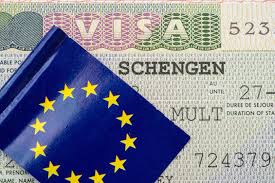










Family Reunification Germany: Bring Your Family to EU


For many international professionals, a career in Germany is only complete once their family joins them. The German government recognizes the importance of the nuclear family, and as of 2026, many of the "red tape" hurdles—such as strict housing space requirements for certain skilled groups—have been relaxed to encourage global talent.
1. Eligibility: Who Can You Bring?
Under German law, family reunification is primarily focused on the nuclear family:
- Spouses or Registered Partners: Legally recognized marriages or civil partnerships.
- Minor Children: Unmarried children under the age of 18.
- Parents & Parents-in-Law: A new provision for 2026 allows skilled workers (who received their permit after March 1, 2024) to bring their parents if their livelihood is fully secured.
2. The Spouse Visa: Requirements & Exemptions
The spouse visa is the most common reunification path. It generally requires the person already in Germany (the "sponsor") to hold a valid residence title.
A. Basic Requirements
- Age: Both spouses must be at least 18 years old.
- Marriage Validity: The marriage must have been legally conducted and recognized in the country where it took place.
- Language Skills (A1 German): Generally, the joining spouse must prove basic German proficiency at the A1 level.
B. Important 2026 Exemptions (No Language Test Needed)
You do not need an A1 certificate if:
- The sponsor holds an EU Blue Card.
- The sponsor is a Highly Skilled Worker (under certain sections of the Residence Act).
- The spouse has a university degree (academic exemption).
- The spouse is a citizen of "privileged" nations (e.g., USA, Canada, Australia, Japan, South Korea, Israel).
3. Bringing Children to Germany
The rules for children depend heavily on their age at the time of application.
Children Under 16
If both parents (or the parent with sole custody) hold a German residence permit, children under 16 have a legal right to join them. No language skills are required.
Children Aged 16 to 18
For teenagers, Germany looks for "integration potential."
- They may need to prove C1 German skills unless the family moves to Germany together or the parent holds an EU Blue Card.
- In 2026, the authorities are more flexible if the child can show they can integrate based on their previous schooling.
4. Financial & Housing Requirements (2026 Update)
To prevent reliance on the German social system (Jobcenter), you must prove you can support your family.
A. The Livelihood Calculation (Secured Income)
Your net income must cover:
- Your own living expenses.
- The standard requirements for your spouse and each child.
- Standard Calculation: For a couple with one child in 2026, you typically need a net monthly income of €2,800 – €3,300 (depending on the city and rent costs).
B. Health Insurance
Every family member must have health insurance coverage from day one.
- Statutory (Public) Insurance: If the sponsor is in the public system (AOK, TK, etc.), the family can usually be added for free via "Family Insurance" (Familienversicherung).
- Private Insurance: If the sponsor is privately insured, each family member requires a separate paid policy.
C. Housing Space (Relaxed for Skilled Workers)
Previously, you needed ~12sqm per person. In 2026, for Skilled Workers and Blue Card holders, the "sufficient living space" requirement is often waived or significantly simplified during the initial visa stage.
5. Step-by-Step Application Process
- Appointment: The family members apply at the German Embassy/Consulate in their home country.
- Document Submission: Original marriage/birth certificates (with Apostille and German translation).
- Approval: The Embassy sends the file to the local Ausländerbehörde (Foreigners' Office) in the sponsor’s German city.
- Entry Visa: Once approved, a 90-day D-Visa is issued.
- Local Registration: Upon arrival, register at the Bürgeramt and convert the visa into a Residence Permit at the local immigration office.